
Enova and GridS2 are collaborating to create and operate a local, distribution level electricity market, in the form of a Distribution System Operator (DSO) pilot. This pilot aims to optimize grid operations, reduce peak demand, and make use of the distributed energy resources in the region.
Our cities and townships are experiencing rapid growth and while this is good news for our communities, it also means more demand on the electricity grid, especially during the hottest summer afternoons and coldest winter mornings when everyone’s drawing power at once.
Traditionally, local distribution companies (LDCs) respond to this growth by building more hard infrastructure such as transmission stations, powerlines and transformers sized for the peak scenario that occurs a few times a year, but being underutilized the rest of the time. Historically this has worked, but infrastructure investments take time, drive up costs which ultimately show up on everyone’s bill.
Enova, with the support of Natural Resources Canada is exploring a more innovative way of addressing the needs of our community. Some of the businesses in our region, such as manufacturers, large facilities, and industrial operators, are already able to shift how and when they use power or can generate their own power on-site. Instead of building new infrastructure to serve a few peak hours a year, we are evaluating various ways of compensating businesses that help meet those instances of peak demand.
By accurately forecasting short-term electricity needs and efficiently managing Distributed Energy Resources (DERs) across the grid, the project will enable Enova Power to deliver overall benefit to customers and communities. This will also help integrate local energy sources while keeping costs manageable as electrification grows.
This is the goal of our Flexible Grids project: to turn our region’s energy users into partners that keep the grid reliable while deferring the need for costly new infrastructure.
From
Traditional model
Without DERS

Traditionally, when communities experience growth and greater demand for electricity, Local Distribution Companies (LDCs) respond by building additional distribution infrastructure (poles, wires and transformers).
To
Building a smarter grid through flexibility
With DERS

Today, we’re building a smarter grid by partnering with C&l customers, Aggregators and Energy Management Providers to offer a more efficient and affordable solution to help us address these pressing localized needs.
DERs help utilize existing system capacity more effectively, defer upgrades, and improve reliability.


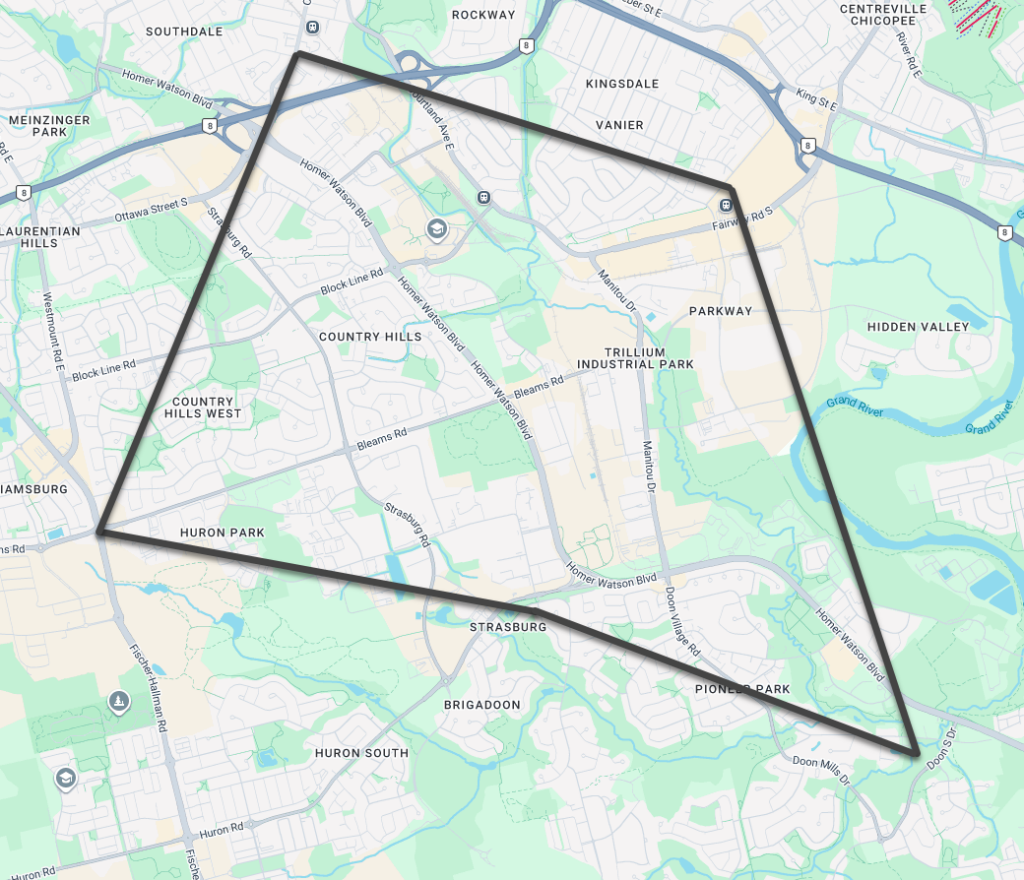
Project Location
The project will be implemented within the Kitchener South area within Enova Power’s service territory. The pilot will focus on a key distribution station this area which serves a diverse mix of residential and commercial through multiple feeders. By focusing on one station with several feeders, Enova will be able to determine how local market signals and smart coordination can help balance supply and demand, improve reliability and reduce system costs. Existing Distributed Energy Resources (DERs) – both generation and load resources would be encouraged to participate in the market.
Partners

Enova Power Corp.
Enova Power Corp. is the trusted energy provider, dedicated to delivering safe and reliable energy solutions that power our communities forward. Serving more than 164,000 residential and business customers in the City of Kitchener, City of Waterloo, Township of Woolwich, Township of Wilmot, and Township of Wellesley, Enova Power Corp. will drive what’s next in energy and sustainability for our communities and beyond.
GridS2
GridS2 is an Ontario based cleantech firm that is helping utilities reduce the cost of delivering electricity by enabling local energy procurement through its innovative transactive energy platform that contains AI-based load forecasting, network constrained optimization and market settlement modules. It is a startup that incorporated in 2021 and has since focused on developing their platform for commercial implementation. It is co-founded by two industry veterans – one a power systems technology leader and the other a consulting professional – both with decades of relevant utility experience and expertise. Between them they have designed, developed, managed and delivered complex engineering products and projects worth millions of dollars in their professional careers.
Project Benefits
1
Affordability
Projects that directly address issues related to reducing the energy burden of communities through grid modernization and innovation. This can involve but is not limited to: projects reducing energy poverty, projects serving low-income communities and housing, and projects reducing the cost of participation related to electrification.
2
Access
Projects that increase the involvement of certain communities and actors in innovative projects, for example: projects serving and involving communities in-need (e.g., high-density housing, communities with energy poverty), project reducing costs of participation, projects establishing communication and increased collaboration. This can include projects improving energy resiliency, increasing parity in grid modernization projects, increasing access to low-cost capital in communities.
3
Participation
Projects that reduce the barriers to participation of certain communities and actors to be direct beneficiaries, leaders, and partners in these projects. For example: projects establishing networks, employing within the community, developing engagement, increasing the skills and knowledge of certain communities in the sector. This can include projects increasing energy democracy, increasing clean energy job creation and contracting within communities.